

Use cases
Use this page to find where a brain fits in your work. Connect one to the AI tools you already use, or build it into your own product.
Worked examples
Start with the one closest to what you’re building.
One brain in every AI tool
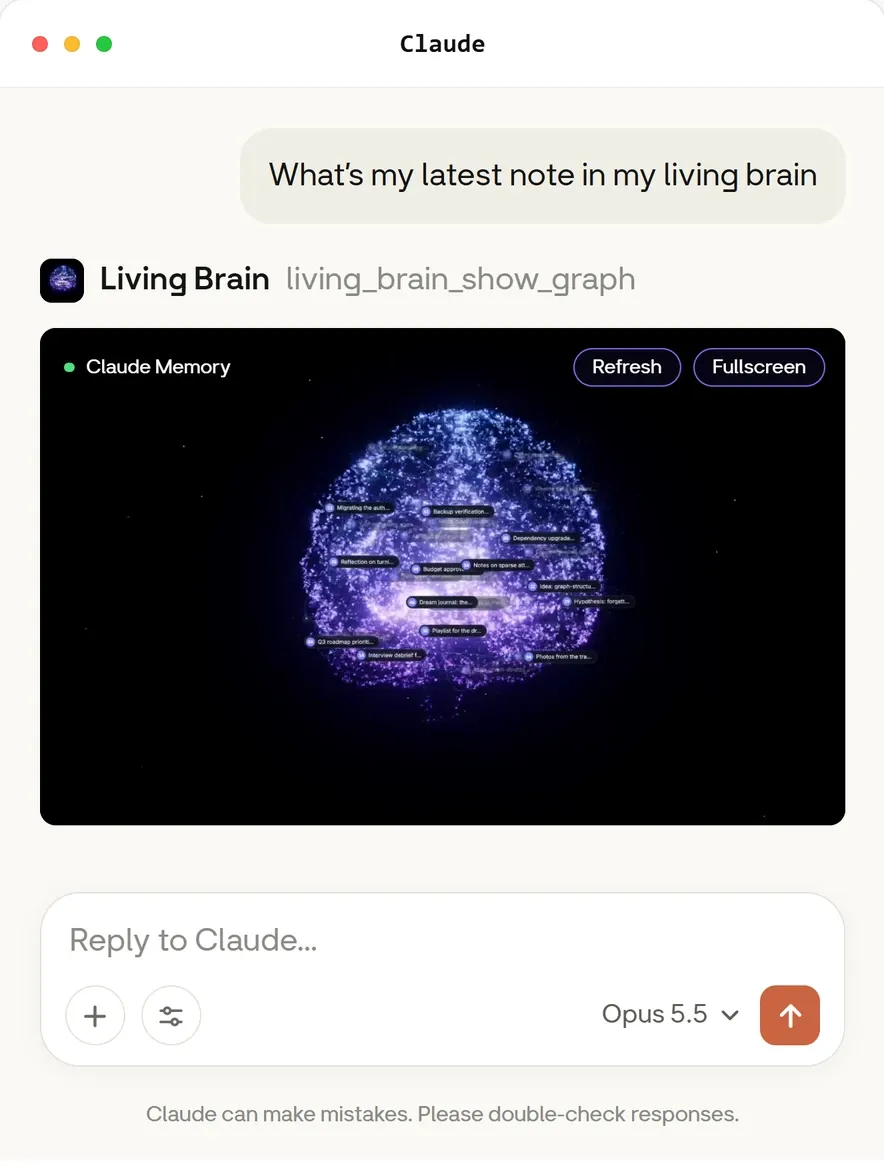
Save something from one tool and ask for it from another. Claude can also open the brain’s graph inside the chat.
Automated X Support Bot
Replies to @mentions on X using only what a curated brain supports, and sends the rest to the team in Slack.
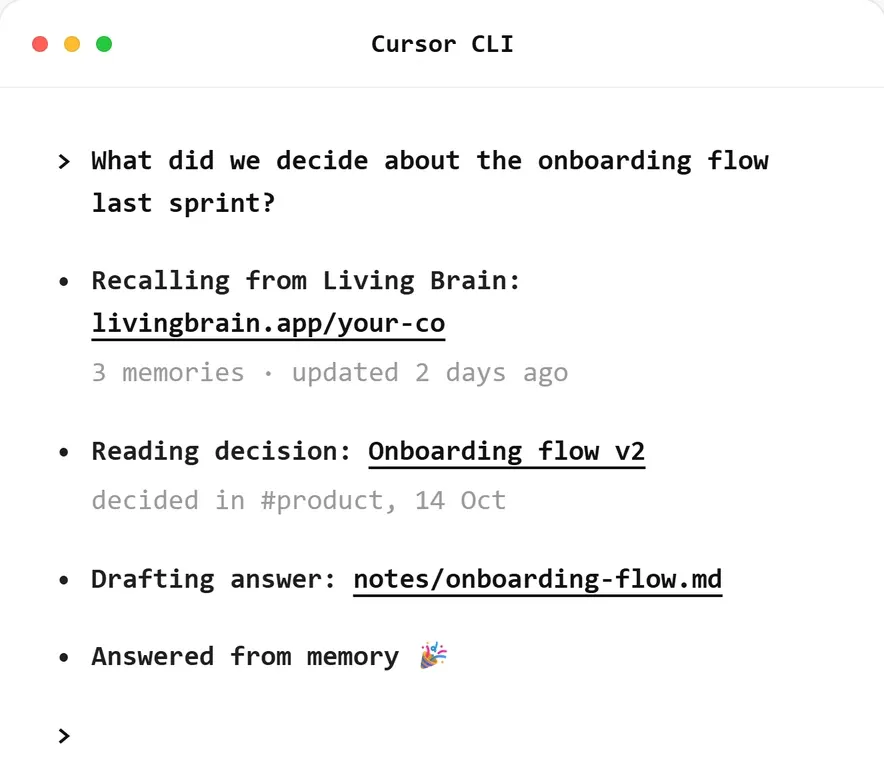
Coding agent memory
Claude Code, Codex and Cursor share a project’s decisions, so a new session can find out why the last one chose what it did.
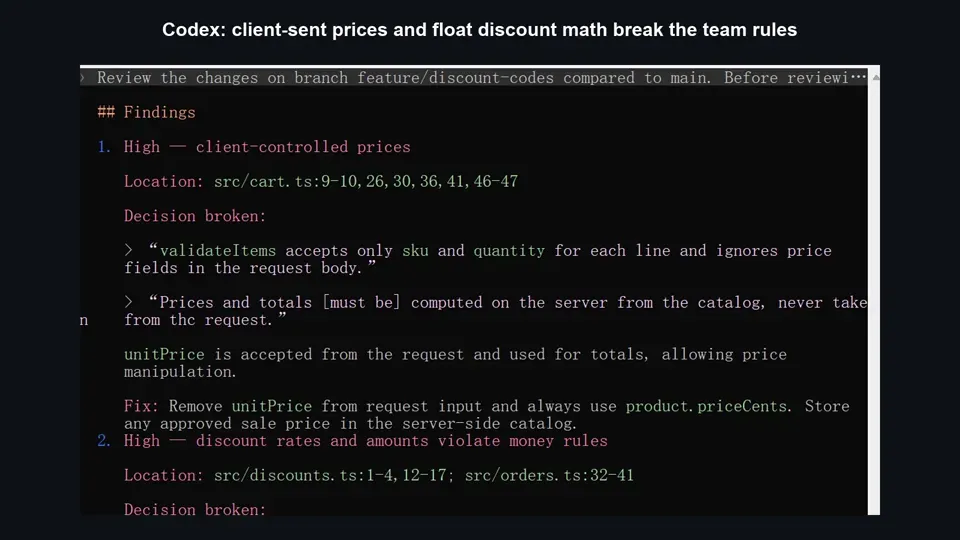
Shared rules in code review
Claude Code saves the team’s coding rules, and Codex uses them to catch a pull request that breaks them.
Customer feedback
Tickets, interviews and sales notes compile into one page per customer problem, with a link to each source.
New-hire onboarding
An assistant answers “why do we do it this way?” from the team’s decisions and their history, and asks the owner when no page covers the question.
Game characters
A character remembers what each player did in a saved game and brings it up in a later play session.
Case files
Filings and witness transcripts compile into pages for each case, and conflicting statements stay on the page with their sources.
Team knowledge in Slack
Post briefs and page changes to the channels where your team already works.
Examples by team
These are starting points for your own brain.
Engineering
- Capture architecture decisions and ask why a service works the way it does.
- Capture merged pull requests from CI, so review decisions reach the next coding session.
- Import postmortems and search them before changing the system involved.
- Keep runbooks in a brain and flag the pages nobody has touched in months.
Product
- Group tickets and interviews by customer problem, however each customer words it.
- Bring back earlier research when a roadmap item is reopened.
- Keep the reason a feature was cut next to the decision to cut it.
- Get a weekly list of every page that changed since the last review.
Customer support
- Draft replies from approved pages and cite each one.
- Send questions with no supporting page to a person, with the reason attached.
- Turn a person’s answer into a page, so the next similar question has a source.
- Review contested pages when a release note and a ticket disagree.
Sales and accounts
- Keep calls, emails and implementation notes on one account’s pages.
- Ask what changed on an account since the last meeting.
- Plan with every constraint in view, including the data-residency rule from an old call.
- Hand an account to a new owner along with its history and sources.
Research
- Capture papers and links, and let the brain group them into topic pages.
- See which findings connect across papers that use different words.
- Use daily briefs to bring back threads you haven’t opened in a while.
- Compare what two sources say about the same claim.
People and operations
- Answer a new hire’s questions from team decisions, with sources.
- Show how a process changed by reading a page’s earlier versions.
- Send stale pages to their owners on a schedule.
- Keep meeting notes searchable by what was decided.
Founders and leadership
- Keep plans, updates and open risks in one brain and ask for next steps from any AI tool.
- Prepare for a meeting from the notes behind each decision.
- See where the written record disagrees with itself.
Your own product
- Send each chat turn through the classifier. The brain keeps preferences and decisions and drops small talk.
- Load the prompt index at the start of a session, then search when a question needs more.
- Give each end user their own brain by using one subject per user.
What each job needs
Most use cases combine a few of these jobs.
When to use something else
Use your database for exact records such as balances and order status. Use your analytics tool for counts and rates. Link to the original document when the wording has legal or financial weight, because a page summarises what its sources say.
How to build with Living Brain covers the write and read paths these examples share.